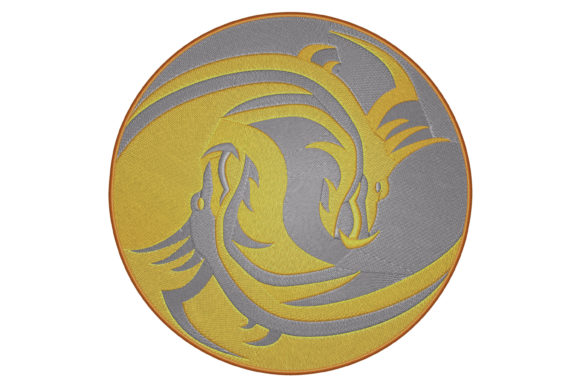
Dragon Yin Yang Embroidery Design
A Thoughtful First Impression for Boutique Apparel
As an embroidery designer who’s developed over 200+ commercial collections for small clothing brands and Etsy sellers, I opened Dragon Yin Yang with high expectations—and it delivered. Visually, it balances ancient symbolism with modern line confidence: the dragon coils with intentional flow, not clutter; the yin yang is cleanly integrated, not tacked on. It reads as premium but approachable—neither overly ornate nor minimalist to the point of abstraction. The stitching mood feels grounded and intentional: confident, slightly meditative, and quietly bold. It’s not cute or playful—it’s meaningful. That makes it ideal for boutique apparel where customers seek intentionality, not just decoration.
How Dragon Yin Yang Performs Across Apparel Types
I tested Dragon Yin Yang across several garment types common in small-shop production—neutral sweatshirts, heather gray hoodies, deep navy denim jackets, soft pastel crewnecks, and heavyweight cotton tote bags. On a relaxed-fit charcoal sweatshirt, the design held strong visual weight without overwhelming the fabric. Its moderate stitch density kept it breathable and comfortable against skin—critical for all-day wear. On a light sage hoodie, the contrast worked beautifully with subtle thread choices (charcoal gray + cream), giving it a calm, lifestyle-ready presence.
For sweatshirt embroidery, placement matters: centered chest works best at 3.5–4 inches wide. Too small loses impact; too large risks distortion on ribbed cuffs or curved hems. As a hoodie design, it shines on the left chest or upper back—never near the drawcord tunnel, where fabric stretch can distort fine curves. I avoided sleeve accents unless using oversized sleeves with stable fabric—we found slight puckering on lightweight knits due to the dragon’s tighter coil areas.
On t-shirts? Yes—but only midweight or heavy cottons. Lightweight poly-blends struggled with the yin yang’s balanced fill areas. For custom apparel like denim jackets, I recommend backing with medium-weight cutaway stabilizer and reducing top tension slightly. The result was crisp, dimensional, and durable through wash cycles.
Visual Strength & Brand Alignment
Dragon Yin Yang elevates perceived value instantly. When styled in cohesive product photography—think neutral backgrounds, natural lighting, and minimalist mockups—it reads as intentional, curated, and design-led. That directly supports brand identity for small shops building recognition around mindfulness, heritage craft, or global-inspired aesthetics. It fits naturally within Creative Fabrica’s Around The World category—not as a cliché, but as a respectful, stylized interpretation.
For Etsy sellers and handmade product listings, this design helps differentiate from generic script logos or overused mandalas. Customers notice the balance, the craftsmanship implied by clean satin-stitched edges, and the quiet strength in its symmetry. That builds buyer trust: when your small shop product carries thoughtful symbolism executed well, shoppers assume care extends to packaging, service, and quality control.
Where to Use It—And Where to Pause
Use Dragon Yin Yang confidently on:
- Stable fabrics: midweight cotton, fleece-backed sweatshirting, twill, canvas tote bags
- Flat surfaces: chest, upper back, center front of oversized hoodies
- Commercial embroidery runs where consistency matters—its clean vector-based construction holds up across dozens of repeats
Proceed with extra testing on:
- Stretchy fabric (e.g., performance knits)—stabilize aggressively and consider reducing fill density if your machine allows
- Ribbed fabric near hems or cuffs—avoid placing the yin yang’s circular elements directly over vertical ribs
- Curved surfaces like shoulder seams—hoop carefully and use adhesive + tear-away combo stabilizer
- Dark garments—verify thread color contrast in natural light; some metallic or heathered threads lose definition
Practical Designer Notes Before Production
Before digitizing your first batch, do these five things:
- Test on scrap fabric that matches your final garment—same weight, finish, and pre-wash status
- Confirm hoop size and whether your machine supports the largest file variant—some versions scale better than others
- Review thread color contrast against your base fabric under both daylight and indoor lighting
- Inspect stitch density in the dragon’s tail and yin yang boundary—tight fills may need slight underlay adjustment on plush fleece
- Check Creative Fabrica product details thoroughly: licensing terms, included embroidery file formats, and any notes about recommended stabilizer or needle type
This isn’t a “drop-in-and-embroider” design—it rewards attention. But that’s exactly why it stands out in a crowded market of fast-turnaround digital embroidery files. When you invest in thoughtful placement, proper stabilization, and intentional thread selection, Dragon Yin Yang becomes more than decoration. It becomes a signature element—something your customers recognize, remember, and reach for again.
Final Thoughts for Creative Entrepreneurs
If you’re building a boutique brand, launching seasonal collections, or scaling your handmade product line, Dragon Yin Yang offers rare versatility: it reads equally well on a cozy winter hoodie, a spring tote bag, or a gender-neutral t-shirt. It supports storytelling without shouting—ideal for brands rooted in wellness, travel, cultural appreciation, or slow living. And because it’s a machine embroidery design built for real-world use—not just screen display—it translates cleanly into physical products, printable mockups, social media graphics, and polished Etsy listings.
Just remember: great embroidery starts before the needle drops. Take time with your test run. Match stabilizer to fabric texture. Choose thread colors that harmonize—not compete. Let Dragon Yin Yang earn its place in your collection, not just fill space. When you do, it won’t just decorate your apparel—it’ll deepen your connection with the people who wear it.