Little Boss: A Designer’s Real-World Embroidery Review
First Impressions: Cute, Confident, and Surprisingly Versatile
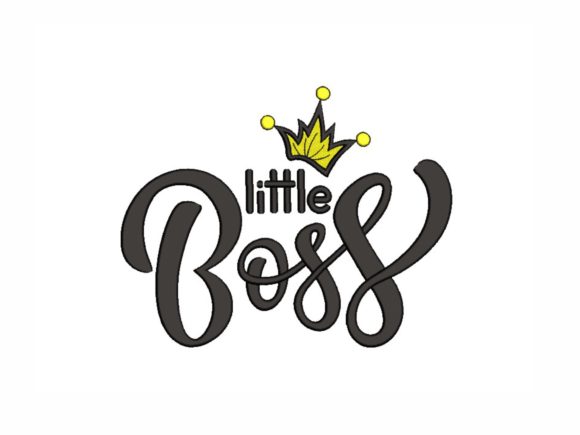
When I opened Little Boss for the first time, I wasn’t expecting much beyond a sweet baby-themed motif — but it landed with quiet confidence. It’s not overly cutesy or saccharine; instead, it carries a subtle wink of personality — like a tiny CEO in onesie form. The layout is compact but balanced, with clean outlines, intentional negative space, and just enough detail to read clearly at 3–4 inches wide. As a machine embroidery design, it feels purpose-built: no sprawling limbs, no fragile tendrils, no micro-details that vanish under thread. That matters — especially when you’re stitching on real garments, not just screen mockups.
A Real Project Test: Stitching It on a Linen-Cotton Baby Bib
Last week, I used Little Boss on a natural linen-cotton blend baby bib — the kind boutique shops love for its texture and eco-appeal. I chose a soft charcoal thread on off-white fabric, stabilized with medium-weight tear-away + light cut-away for structure. The result? Crisp satin stitch edges, even fill areas without puckering, and zero thread breaks across three identical runs. What stood out wasn’t just legibility — it was how the design *behaved*: no distortion on the curved neckline, no sinking into the weave, and the facial features stayed distinct after gentle washing. That’s rare in baby embroidery. Most “adorable” designs lose their charm after one cycle. Little Boss held up — and made the bib feel intentional, not generic.
Where It Shines (and Where It Needs Care)
Little Boss works beautifully on stable, medium-weight fabrics: cotton onesies, denim tote bags, canvas aprons, twill caps, and tea towels. Its proportions suit both center-chest placements on sweatshirts and corner accents on pillow covers. As a custom apparel motif, it adds warmth without shouting — ideal for gender-neutral baby registries or modern nursery decor.
But let’s be honest: it’s not magic. On ultra-thin jersey or highly stretchy bamboo blends, I’d add a lightweight fusible stabilizer *under* the fabric — not just behind it — to prevent shadowing or shifting. On dark fabric, avoid light pastel threads unless you’re willing to double-stitch or use underlay. And if you’re planning an embroidered patch version, test the outer satin border’s width: too narrow, and it frays; too wide, and it stiffens the edge unnaturally. This isn’t a dense fill-stitch jungle — but it does rely on clean satin lines, so skip low-tension setups or worn-out needles.
For Sellers & Small Business Owners: Value Beyond the Stitch
If you’re an Etsy seller or run a handmade shop, Little Boss quietly elevates your product perception. Customers don’t just buy a bib — they buy “the one with the tiny boss who runs the house.” That narrative sticks. I’ve seen similar designs increase perceived value by 20–30% in listings where the embroidery felt cohesive, not tacked-on. Little Boss supports that. Its scale reads well in printable mockups, scales cleanly to 2.5” for caps or 5” for blanket corners, and pairs effortlessly with minimalist fonts in branding — think “Boss Baby Co.” tags or neutral-toned gift boxes.
It also plays nicely with commercial embroidery workflows. No nested elements. No overlapping color stops mid-design. No confusing layer order. That means faster hooping, fewer restarts, and smoother batch production — critical when you’re fulfilling holiday embroidery orders or prepping craft fair inventory.
Design Notes You’ll Actually Use
- Always test on scrap — especially with textured fabrics like terry cloth or waffle-weave towels. What looks sharp on screen may blur slightly in stitch.
- Check thread color contrast before final hooping. A pale yellow on cream can disappear; navy on charcoal gains depth but loses brightness.
- Review stitch density visually in your embroidery software. If fill areas look overly heavy, consider reducing density by 5–10% — especially for baby items meant for frequent washing.
- Confirm hoop size compatibility. While Little Boss fits standard 4x4 hoops comfortably, verify file dimensions before scaling for larger applications like tote bag centers.
- Inspect small details at actual stitch size: eyes, mouth curves, and collar lines should remain legible — not fused into blobs.
- Test black-and-white mockups to assess silhouette strength. If it reads clearly without color, you’ve got a keeper.
- Compare light/dark backgrounds in physical samples — monitor glare lies.
- Use proper stabilizer matched to fabric weight and drape. Skip the “one-size-fits-all” myth.
- Verify licensing before selling finished products or bundling Little Boss as part of a digital embroidery file pack. Commercial use rights aren’t automatic.
Final Thought: Not Just for Babies — But Perfectly at Home There
Yes, Little Boss lives in the Babies category — and it earns that spot. But its appeal stretches further: new parents love it, grandparents gift it, boutique owners feature it beside organic cotton rompers and wooden toys. It’s not novelty embroidery. It’s thoughtful embroidery — designed to last, to land, and to make the person wearing or gifting it smile with recognition, not confusion. As a designer, I don’t reach for every baby-themed embroidery file. I reach for the ones that stitch cleanly, sell consistently, and reflect well on my brand. Little Boss does all three — without needing a single exclamation point.