Turkey Embroidery Design Review
First Impressions: Warm, Whimsical, and Unmistakably Thanksgiving
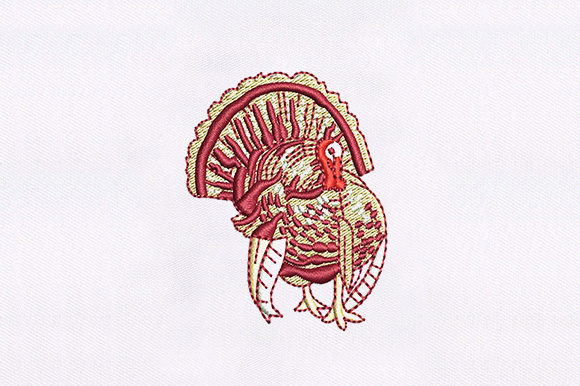
As an embroidery designer who’s built seasonal collections for over twelve years—ranging from Easter linens to Christmas apparel—I opened Turkey with high expectations. What greeted me wasn’t just a bird—it was a mood: cozy, nostalgic, and gently festive. The design balances charm and detail without tipping into clutter. Its lines are confident but not rigid; the featherwork suggests texture rather than demanding photorealism. It feels hand-drawn in spirit—like something you’d find on a vintage recipe card or a family heirloom apron. That warmth matters. Holiday shoppers don’t buy stitches—they buy sentiment. Turkey delivers that instantly.
Real-World Seasonal Use: Where This Design Shines
I tested Turkey across six product categories I regularly produce for holiday markets and Etsy shops—and it performed consistently well where intention and execution aligned.
- Sweatshirt embroidery: Centered on crewnecks or left-chest on raglans, Turkey reads clearly even at 3.5”–4”. Its clean outer silhouette holds up beautifully on textured fleece, especially when paired with matte cotton thread.
- Tote bag design: On natural canvas or unbleached cotton, the design adds rustic charm without overwhelming. I stitched it oversized (5”) on the front panel of a 15”x16” tote—perfect for farmers’ market shoppers or Thanksgiving hostess gifts.
- Kitchen towel embroidery: Placed diagonally near the corner, Turkey becomes a subtle focal point. Its balanced negative space prevents visual fatigue—a critical win for functional home goods.
- Pillow cover & ornament pairings: I used the same Turkey file across both formats—scaled to 2.75” for ornaments and 4.25” for 18” square pillow covers. The consistency strengthened my “Thanksgiving Hearth” collection branding.
- Embroidered patch: With light cutaway stabilizer and tight satin stitching, Turkey pressed cleanly onto twill and denim. Ideal for back-of-jacket placement or as a sew-on gift add-on.
- Baby onesies & toddler aprons: At 2.25”, it retained legibility and softness—no scratchy density. Paired with ecru thread on oatmeal fabric, it read as sweet, not cutesy.
Where to Proceed Thoughtfully
Every strong Creative Fabrica embroidery has boundaries—and knowing them saves time, thread, and customer trust. Here’s where I recommend extra attention with Turkey:
- Hoop size: Avoid sub-3” hoops unless you’re confident in your machine’s fine-detail handling. Smaller scaling risks losing feather definition and increasing stitch density unintentionally.
- Fabric texture: Thick terry cloth or heavy linen blends require extra stabilizer layers. I used medium tear-away + light cutaway for kitchen towels—without it, the beak and eye details blurred.
- Dark fabric: The design includes subtle interior shading. On navy or charcoal, test thread colors first—cream or tan often reads better than stark white for dimension.
- Stretchy garments: Not ideal for ribbed knits or performance fabrics without proper backing. If using on long-sleeve tees, stabilize aggressively and avoid shoulder seams.
- Metallic thread: While tempting for holiday sparkle, metallics can snag in dense feather areas. Reserve for outline-only versions or simplified derivatives.
Why This Design Strengthens Your Holiday Product Strategy
Turkey isn’t just a machine embroidery design—it’s a seasonal anchor. In my Etsy shop, Thanksgiving items see a sharp lift starting mid-October. Designs like this help me bundle products meaningfully: a matching set of embroidered kitchen towel, oven mitt, and apron becomes a premium handmade gift. Customers recognize the cohesive motif instantly—no explanation needed. That visual recognition builds trust, especially for repeat buyers scrolling quickly during peak season.
It also supports storytelling. When I post Instagram reels showing Turkey stitched on a linen napkin beside a maple-glazed squash dish, the design doesn’t compete—it complements. That emotional resonance lifts perceived value. Buyers pay more for pieces that feel intentional, curated, and connected to ritual—not just decoration.
For small shop owners building brand consistency, Turkey offers flexibility without fragmentation. You can use it bold and singular (on a sweatshirt), delicate and repeated (as a border on a table runner), or deconstructed (feathers only as a pattern element). That versatility means fewer designs to manage—and stronger seasonal cohesion.
Practical Designer Notes Before You Stitch
Before adding Turkey to your holiday lineup, here’s what I do every time:
- Check the embroidery file details on Creative Fabrica—confirm included formats match your machine (PES, DST, JEF, etc.) and verify licensing permits commercial use for finished products.
- Run a test on scrap fabric matching your target garment’s weight and weave. Note how the beak, eye, and wing edge hold up.
- Review stitch density. If it feels heavy for your fabric, consider simplifying one layer—or reach out to the designer (if contact is available) for a low-density version.
- Match thread colors intentionally: warm taupes and burnt oranges read more autumnal than primary reds. Keep a physical swatch book nearby.
- Create at least two printable mockups: one lifestyle (e.g., Turkey on a folded towel beside pumpkins), one flat lay (showing scale and placement). These convert better than raw stitch files on Etsy listings.
- Always note your hoop size and stabilizer combo in your production log—reproducibility is essential when fulfilling 50+ orders in November.
Final Thought: A Thoughtful Addition to Any Seasonal Collection
Turkey earns its place—not because it’s flashy, but because it’s reliable, emotionally resonant, and commercially smart. It bridges tradition and modern craft sensibility. As a Birds-category design, it stands apart from generic florals or abstract motifs by offering immediate seasonal clarity—without sacrificing artistry. For Etsy sellers, craft fair vendors, and small-batch apparel decorators, it’s a low-risk, high-return seasonal embroidery asset. Whether you’re launching your first holiday line or refining a decade-old collection, Turkey stitches in confidence, warmth, and quiet professionalism—exactly what handmade holiday shoppers are looking for.