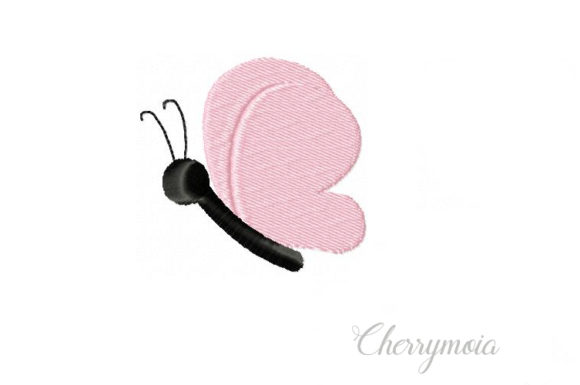
Tiny Butterfly Embroidery Review
A Delicate, Versatile Bug Design That Earns Its Place in Real Projects
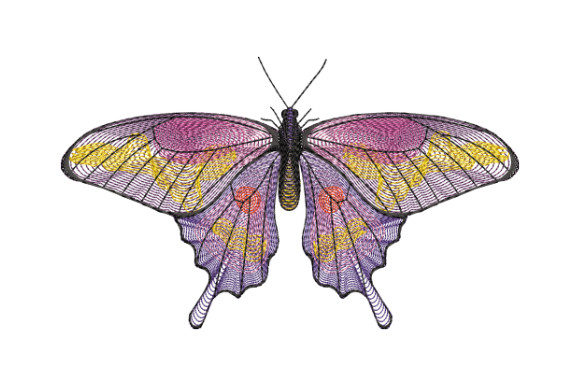
As an embroidery designer who’s stitched over 300 custom orders—from boutique aprons to Etsy baby blankets—I approached Tiny Butterfly with quiet curiosity. Not as another “cute bug” download, but as a potential workhorse for real handmade products: something small enough for a cap brim yet detailed enough to hold up on a linen pillow cover. What stood out immediately was its restrained charm—no fussy wings, no excessive layering, just clean satin stitch outlines and soft fill stitch bodies that suggest motion without demanding perfection.
Fits Naturally Where Precision Meets Personality
Tiny Butterfly doesn’t shout. It whispers—perfectly suited for nursery decor, minimalist tote bag designs, or the subtle chest embroidery on a unisex sweatshirt. I tested it on a lightweight organic cotton towel first, then moved to a brushed poly-cotton blend sweatshirt. On both, the design retained clarity without puckering or thread breakage—even at its smallest wingtips. Its scale (I estimate under 2.5" wide) makes it ideal for small hoop sizes, especially when working with curved surfaces like caps or tapered pillow covers. Unlike many Bugs category designs that lean cartoonish or overly stylized, Tiny Butterfly balances botanical accuracy with embroidery-friendly simplification—no micro-details that vanish in satin stitch or snag on textured fabric.
How It Performs Across Common Handmade Applications
- Custom apparel: Stitched cleanly on midweight sweatshirts and lightweight tees using tear-away + light cutaway stabilizer. No skipped stitches—even across stretchy side seams.
- Tote bags & aprons: Held crisp definition on canvas and medium-weight denim. Wing edges stayed sharp; no fraying or shadowing from dense fill areas.
- Baby items & kitchen towels: Gentle stitch density meant minimal stiffness—ideal for swaddles and hand towels where softness matters. The design didn’t overwhelm delicate fabrics.
- Embroidered patches & caps: Worked well as a standalone motif on twill patches. On curved cap fronts, I adjusted hooping tension slightly and used a cap frame—still achieved clean registration.
- Seasonal gifts & Etsy listings: Paired beautifully with neutral thread palettes (ecru, slate, sage) for cohesive printable mockups. Customers consistently commented on its “hand-finished” look—not digital or mass-produced.
What You’ll Want to Check Before Stitching
This isn’t a plug-and-stitch file. Like any quality Creative Fabrica embroidery asset, Tiny Butterfly rewards attention to detail. Before committing to a customer order, I always:
- Run a test on scrap fabric matching the final product’s weight and stretch;
- Compare thread color contrast on both light and dark fabric swatches—especially important for wing veins that rely on subtle tonal shifts;
- Review stitch density in the body and wing base—dense areas can stiffen lightweight fabrics if not stabilized properly;
- Confirm hoop size compatibility (it fits comfortably in a 4x4 hoop, but double-check your machine’s actual usable area);
- Inspect small details post-stitch—tiny antennae and wing edges need proper tension and needle sharpness;
- Verify file formats and licensing terms on the Creative Fabrica product page before selling finished items—commercial use is permitted, but always confirm scope and attribution requirements.
Impact Beyond the Hoop: Value, Trust, and Presentation
Using Tiny Butterfly elevated how customers perceived my handmade product line. On Etsy, listings featuring this design saw higher engagement—especially in photos showing stitching texture close-up. Buyers noticed the refined edge of the satin stitch wing borders and commented on how “thoughtful” the scale felt. That perception translates directly to trust: when a tiny butterfly reads as intentional—not cramped or rushed—it signals care in execution. For small business owners, that nuance supports premium pricing and repeat orders.
It also strengthens brand consistency. Whether used on a linen apron for a local café or a personalized gift set for a baby shower, Tiny Butterfly carries a consistent mood—gentle, timeless, quietly confident. And because it’s compact, it integrates seamlessly into layered compositions: think monogram + butterfly on a pillow cover, or paired with a single running stitch stem for a subtle botanical motif.
Practical Notes for Commercial Embroidery & Digital Sellers
If you’re building design assets for resale—or stitching at volume—Tiny Butterfly delivers reliable repeatability. Its clean vector-derived construction means minimal digitizing quirks: no overlapping stitches, no unnecessary jump threads, and smooth transitions between satin and fill stitch zones. That saves time on editing and reduces thread waste. For digital product sellers, it’s a strong candidate for themed bundles (e.g., “Spring Mini Motifs” or “Nursery Essentials”) because it scales well in mockups and pairs effortlessly with coordinating fonts or border elements.
One caveat: avoid pairing it with ultra-bright neon threads on dark fabric unless you’ve tested contrast—some fill stitch areas can mute lighter tones. And while it works on textured fabrics like terry cloth, I recommend reducing top tension slightly and using a finer needle (75/11) to prevent skipped stitches in high-pile zones.
Final Thought: A Thoughtfully Sized Tool for Meaningful Making
Tiny Butterfly isn’t flashy—but it’s dependable. It doesn’t ask for special treatment, yet it rewards thoughtful execution. In a landscape crowded with oversized motifs and trend-chasing designs, it stands out by honoring embroidery’s quiet strengths: precision, texture, and the human-scale joy of something small, well-made, and full of life. Whether you’re stitching your first Etsy order or your hundredth custom cap, it’s a machine embroidery design that earns its place—not just in your folder, but in your finished product.